

Book Date No. 22
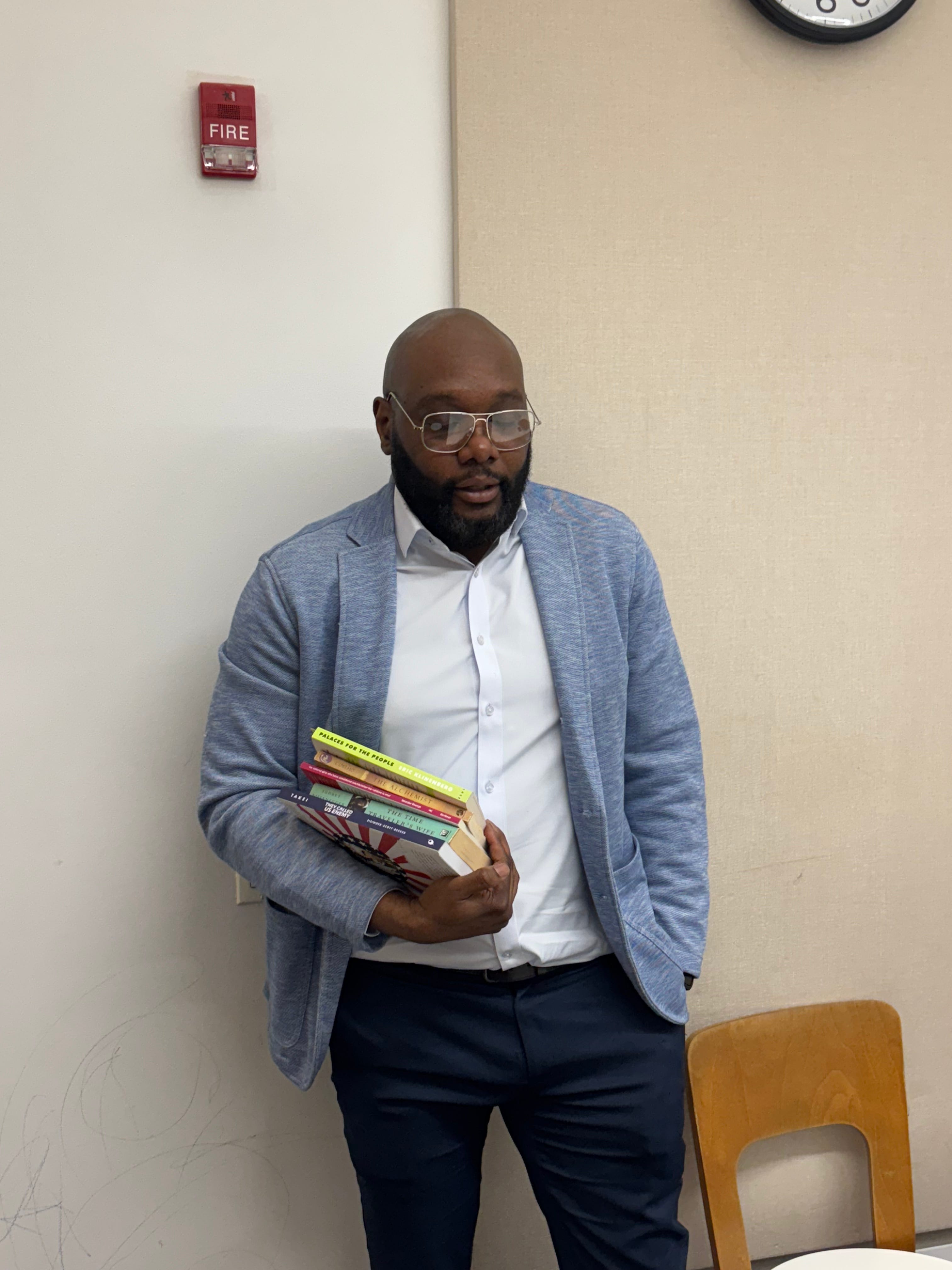
A trip to the Brooklyn Public Library with chief librarian Edwin Maxwell.

You’ll notice that this edition of Book Date is also free. It feels wrong, if not illegal, to paywall this post given that libraries are about accessibility. Sign up for a library card, here.
A few months ago I got an email asking if I’d be interested in interviewing the recently appointed chief librarian of the Brooklyn Public Library, Edwin Maxwell. I immediately agreed. I wished I’d thought of it sooner, but admittedly I didn’t think you could just talk to the chief librarian of anywhere, much less the institution that issued my very first library card. I met Edwin and his team at the main branch on a cold, rainy day in March where we talked about what makes a reader, comic books, and why he’ll never give up his hour-long commute. Read about that, below.
Can you state your name for the record?
Edwin Maxwell.
What do you do?
I’m the chief librarian at Brooklyn Public Library.
What does being the chief librarian entail?
We have 62 locations in Brooklyn. In most cases, it’s within a half a mile of everyone’s residence, but definitely within a mile. I am responsible for all the public service that happens in 61 locations. The 62nd location is the Center for Brooklyn History, formerly known as the Brooklyn Historical Society. I don’t oversee operations there. It is our only real archive. With the other 61 locations I oversee public servicing. Any way that you interface with the library as a general member or patron, I oversee those operations.
How long have you worked at the library?
Now you’re going to make me age myself. Just over 20 years. The majority of time has been here in Brooklyn. I worked in the city for a few years and I’ve also worked out in Long Island. I did two stints in Brooklyn. The first one being about 12 years and then I’ve been back in management roles for the last six or seven here. It flew by.
Where are you from?
I am born and raised in the Bronx. I still live in the Bronx. I often say I sleep in the Bronx, but my life is in Brooklyn and has been for a very long time.
What was your reading life like as a kid? What built your relationship to reading?
Reading as recreation was devalued or deprioritized when I was growing up. I did not grow up in a reading environment, but that doesn’t mean I didn’t read. I read a lot of comic books. My aunt worked for one of the major comic book companies, and I was very interested in things like animals. As a little kid, I would read every zoo book and guides about how to put something together. Oftentimes what you hear from people, if you’re not reading in the traditional means, if you’re not reading canon, then they don’t consider you a reader. I don’t think that’s true. I fell in love with more traditional methods of reading around college. The canon of literature when you’re in high school and junior high school is kind of forced upon you so you don’t learn to love or enjoy reading because it’s seen as a task. It was later on in life that I really picked up reading as a recreational activity.
What kind of comics were you reading?
I was a big Marvel fan. My aunt worked for DC. But those were easily available to me because they worked in the offices and we could read them beforehand. The comic book companies would have a collection of all the comics. Even if you were in DC, they had a lot of Marvel stuff. There were some DC lines that I would read from. I was a big X-Men person. I liked mutants. I was a Wolverine and Gambit person as well. I don’t know why this didn’t transition into fantasy.
What books sparked the shift to more “traditional,” reading?
I remember Shakespeare being pushed upon us. It wasn’t until MacBeth. I don’t know why Macbeth, but that shifted me. I read a lot of instructional things that people might call self-help. Those books helped me make the transition. I also went to undergrad for business, so a lot of business material, entrepreneurial, and books about financial literacy got me into more traditional types of reading.
What are you reading these days?
I still tend to read more nonfiction. I’m a people person. My exploration through reading or any other form of media is trying to understand people and understand different points of views. You learn a lot about a person by what they read. If someone says, “Oh, this is one of my favorite books,” even though that might not be my genre or thing that I would be interested in, I’m interested in what makes you you. So I would read that.
If someone wanted to get to know you, what book would you tell them to read?
The Alchemist by Paulo Coelho. I would say I’m more spiritual than religious. I’ve been in the church and then went to Catholic school for a portion of my life. To me, that book is a parable. It sums up life. I am a more positive, optimistic person. To me, you go through obstacles and it’s ultimately for your benefit. That’s the message. I don’t want to misquote Paulo Coelho, but he says the universe conspires for you. It resonated with me and always has. I would recommend it to people who are trying to fall back in love with reading. It’s also a small book, it’s not long. It’s not a huge commitment. It has a beautiful story.
How much are you reading these days?
I read about a book a month from beginning to end but I read a lot more than that. I read a lot of studies and am constantly ingesting information. Being here, a lot of material is put in front of me. Some people have to read in its entirety. I don’t subscribe to that philosophy. There’s so many books in the world. Pick it up, read a page, read a chapter. If you’re into it, then continue reading it. If not, put it down, come back to it, try something else. I’m constantly nibbling at things. I also use reading as a social tool. I may have a group of people at work that we share recommendations or read something together. I do that with my wife. I do that with friends.
What’s the last book you picked up?
The Next Conversation, by Jefferson Fisher.
What’s the last book you finished?
The Forest of Noise. It’s poetry and it is set in Gaza. It won our book awards two years ago. It’s the social aspect of it, to get to understand a firsthand account of what’s going on in Gaza and not just necessarily looking at the media that is being presented to us. It’s intense.
What book has taught you the most about people?
Palaces for the People: How Social Infrastructure Can Help Fight Inequality, Polarization, and the Decline of Civic Life. I’m actually in this a little bit, just a little bit. But this book talks about the work that I do and the importance of it, of what it means to have places where people can gather essentially for free. What does it mean to be part of the public good? Outliers by Malcolm Gladwell changed how I looked at the education system. Everything I pick up teaches me something about people. Fiction as well. Some people are more attracted to the literary side of it, like the placement of words, how moving those words around can change the meaning. I’m like that when it comes to hip hop. But reading, that connection for me is peering into somebody else’s perspective and point of view.
What’s the last book someone recommended to you?
Dungeon Crawler Carl by Matt Dinniman. I was at a bar telling someone I was trying to get back into fiction. They said this would be the next Game of Thrones.
Who in your life has the best reading taste?
My wife. I also have an older cousin who was the first of our group to graduate. We were all first generation college students. His master’s was in Africana studies. His taste tends to be more on the nonfiction side, more into history than I would be, but I would take his reading advice. Then everyone here. With the book prize, we have different committees for different genres. They’ll read everything that comes out.
What’s the last book you read that you felt you had to recommend to everybody you knew?
Between the World and Me by Ta-Nehisi Coates. Everybody should read that. For Black men, it’s one of the rare times that you see something that speaks to your experience. I don’t think I’ve ever read anything that quite articulated it that way. And for our counterparts, it gives you an understanding and perspective of what it is to be a Black man better than anything that I can point to.
What’s your reading routine?
During my commute. It’s about an hour. So I’m either reading or listening to something on the train ride from the Bronx to Brooklyn. That’s where most of it happens. Even though I work in a library, it’s hard to read. I guarantee you everybody that works here will say, “I wish I had more time to read. I’m surrounded by it encompassed by other things.” That’s why I don’t want to give up the commute. If I moved to Brooklyn, I’d never read.
Paperback or hardcover?
I use audio the most. But I think the answer is always paperback first. However, if it’s something that you go back to read or something you want to keep in your collection at home, hardcover.
What are you thinking deeply about right now?
The state of the world. We have a lot more in common than we like to give ourselves credit for. We’re living in a very polarized time. It’s like either you’re on this side or you’re that side. There’s a lot of commonality and I wish more people would take time to think deeply about that. We all have families that we care deeply about. There’s issues that we care about. We all bleed the same color. We have so many more similarities with us than there are differences. I love the spectrum of people. That’s why I love New York City. That’s why I love Brooklyn. I love that you can go three blocks down and feel like you’re in a different country and experience similar emotions but in a very different container.
What’s your favorite extracurricular activity?
I love culture. I love how people are the same but it shows up differently. I don’t think you can understand people unless you travel. I always tell people if you go and travel more, you can see how broad this world really is. I can tell you how many billions of people, but what context do you have as to what that means? The things that people are so self-conscious or caught up about, that’s admired in another part of the world. And I’m not talking about a small group of people, millions and millions of people.
Anywhere you would go back to?
A lot of places. But I really enjoyed Bangkok. It reminds me of the New York I grew up in.
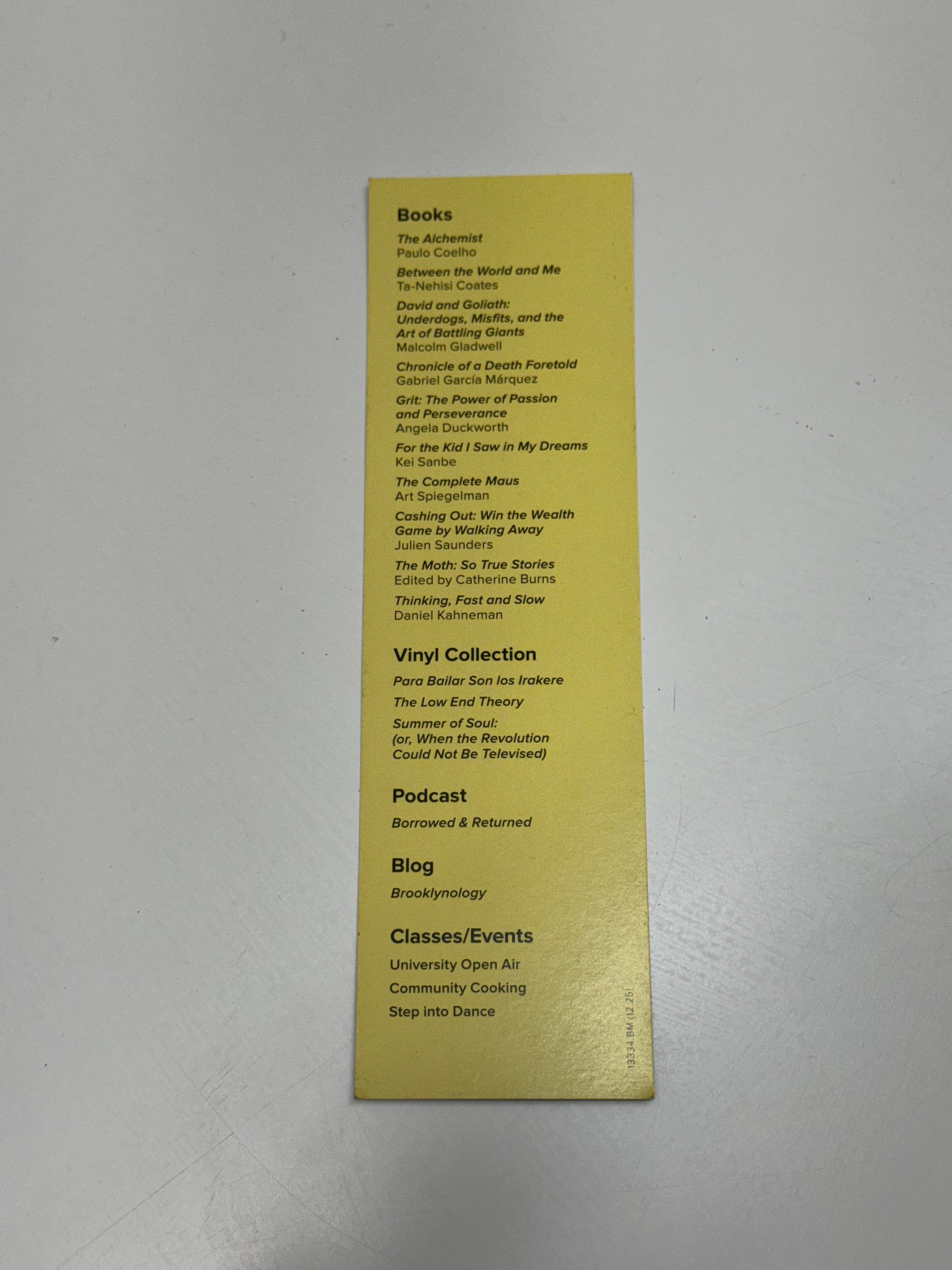
Thanks for reading! For the paid list, there will be a second book date this month with a young, debut author who loves Toni Morrison and Camus. More on that in a week or two.
"I’m constantly nibbling at things." Loved this! So cool to get a peek behind the scenes at BPL.
Edwin is a light at BPL and a great colleague and friend!